A structured, supervised overnight field trip combining real astronomy, farm exploration, STEM activities and outdoor education — 30 km from Hyderabad.
Students spend years learning about constellations, the solar system and the ecosystem — often without ever observing any of it in real life. Novae Glamp changes that. In one overnight trip, students look through a real telescope, launch water rockets, walk a working farm and sleep under a sky full of stars they've only read about until now.
Every session is led by qualified guides and is aligned to curiosity-based learning. Safety is planned first, learning is embedded throughout, and every student returns with something they genuinely didn't know before.

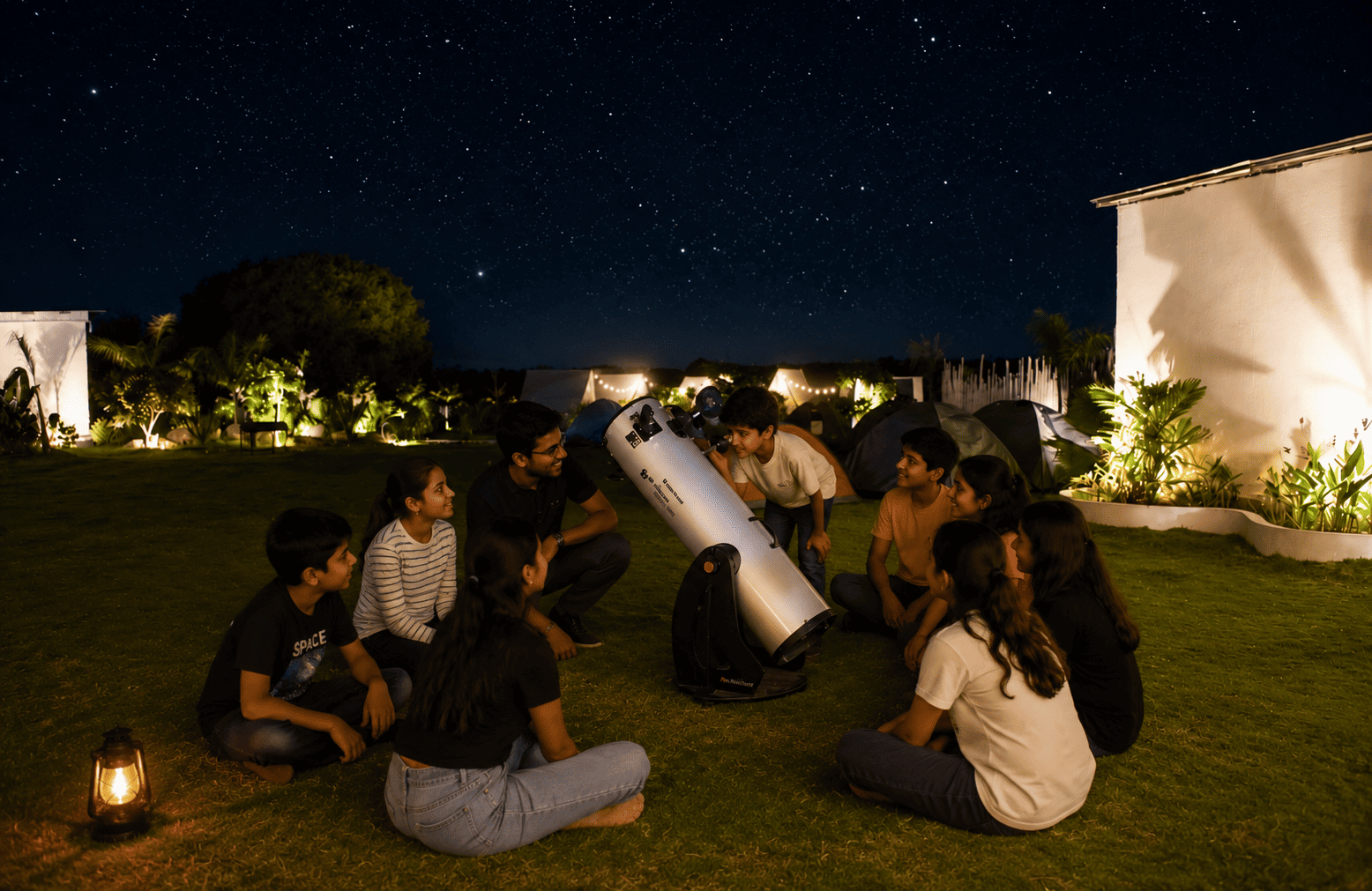
Our astronomy guide leads a structured session — constellation identification, understanding the solar system scale, and telescope viewing. Every student gets time at the eyepiece. Saturn's rings and Jupiter's moons are the moments nobody forgets.
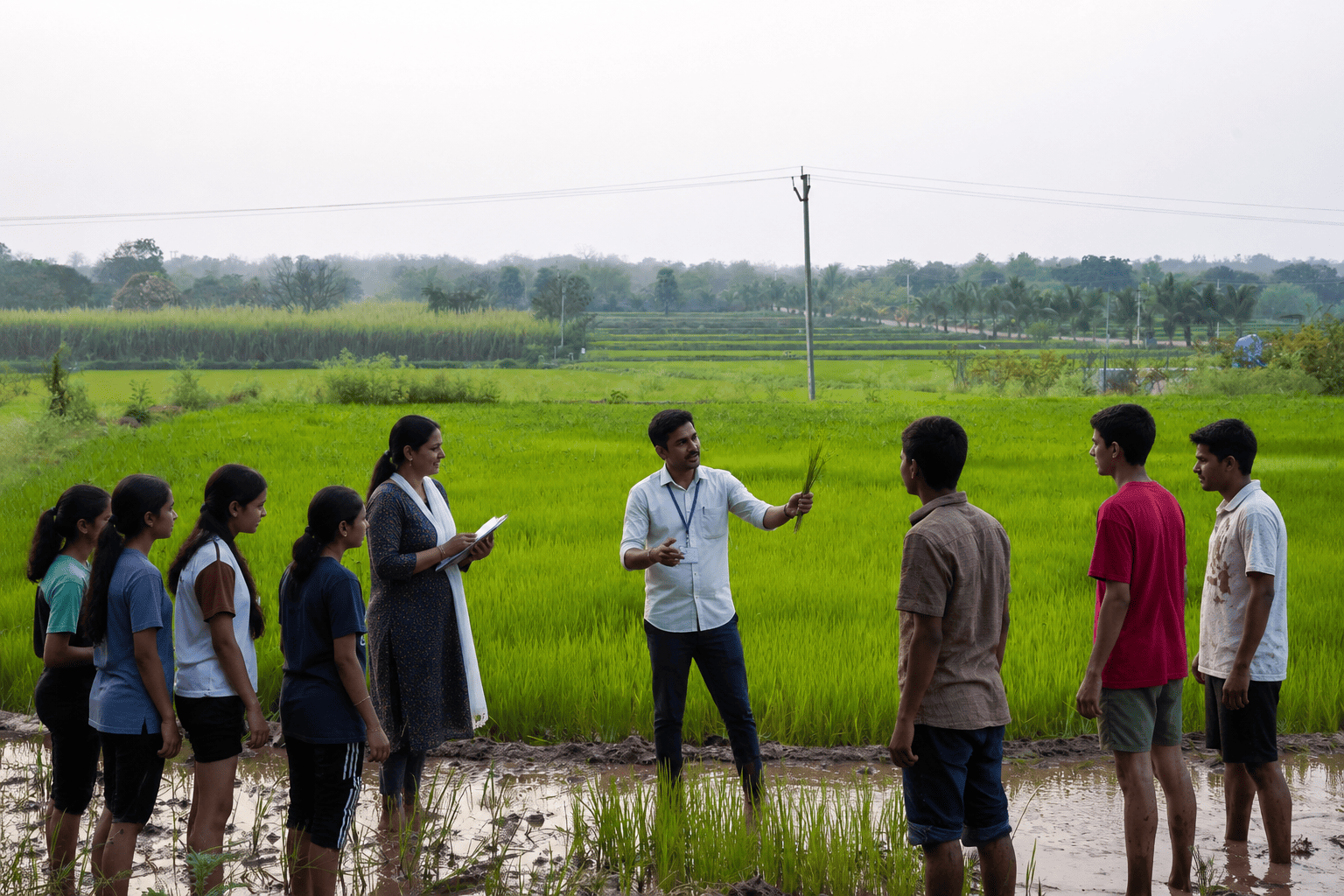
A guided walk through a working farm — students learn about soil types, seasonal crops, water systems and the food supply chain. Hands-on, visual, and directly relevant to science and geography curricula.
Teams design and launch water-powered rockets, applying principles of pressure, trajectory and aerodynamics. The most competitive and energetic activity of the trip — and the one students talk about longest after.
Guided sunrise walk through the surrounding landscape — local bird species, native plants, ecosystem observation. Quiet, meditative and deeply engaging for curious young minds.
Students create their own hand-drawn constellation maps from observation — a take-home artefact from the astronomy session they can keep and refer to.
Guided journaling through the trip — nature observations, farm sketches, astronomy notes. Structured to support science and English writing outcomes.
Students present their top learnings from the trip before departure — building communication skills and reinforcing what they observed.
A curated set of group and activity photos shared digitally within 48 hours of the trip — for school newsletters, display boards and memory keeping.
Each student plants a seed on the farm — connecting food systems learning to a tangible, living outcome they can track over weeks from school.
A guided after-dark walk using stars for navigation — combining astronomy with geography and building confidence in outdoor environments.

Constellation maps, telescope observations, water rocket physics — not simulated, not on a screen. Real instruments, real phenomena, real discovery.
Shared overnight experiences build bonds that classroom hours can't replicate. Students who compete in water rockets and watch stars together work together differently afterwards.
Three students from our last school group said they want to study astrophysics. Not because we suggested it. Because looking through a real telescope at Saturn does that to you.
We understand that sending students on an overnight trip is a decision made carefully. Every aspect of safety at Novae Glamp is planned before the first student arrives.